

Snow Rider 3D Challenges: A Complete Guide
Introduction
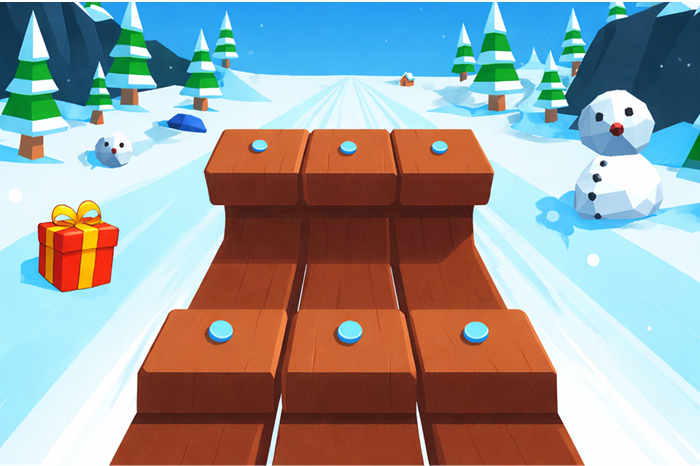
Snow Rider 3D is a fast-paced endless sledding game that combines simple controls with increasingly difficult obstacles. At first glance, the game appears easy: guide a sled down a snowy hill, avoid crashing, and collect gifts along the way. However, as players spend more time with the game, they quickly realize that reaching high scores requires excellent reflexes, careful planning, and consistent practice.
Unlike many modern games that rely on complex mechanics or upgrades, Snow Rider 3D focuses on pure skill. Every run presents new arrangements of obstacles, making each attempt unique. The challenge lies in surviving as long as possible while maintaining speed and avoiding collisions.
This article explores the major challenges players face in Snow Rider 3D, why these challenges make the game enjoyable, and strategies for overcoming them.
Understanding the Gameplay
The objective of Snow Rider 3D is straightforward:
- Slide downhill endlessly.
- Avoid all obstacles.
- Collect presents.
- Stay alive as long as possible.
- Achieve the highest possible score.
Although these objectives sound simple, the game's random obstacle generation ensures that no two runs are exactly alike. This randomness creates excitement while forcing players to stay alert throughout every session.
Challenge 1: Increasing Speed
One of the first major challenges players encounter is speed.
At the beginning of each run, movement feels comfortable. Obstacles are easy to recognize, and there is plenty of time to react.
As players continue, however, the sled gradually accelerates.
The increasing speed introduces several problems:
- Less reaction time
- Harder decision-making
- Greater pressure
- Increased chance of mistakes
Players often lose not because obstacles become impossible but because their brains have less time to process upcoming hazards.
Managing speed mentally becomes one of the game's greatest tests.
Challenge 2: Random Obstacle Placement
Unlike games with fixed levels, Snow Rider 3D generates obstacles randomly.
These obstacles include:
- Trees
- Snowmen
- Rocks
- Snowballs
- Wooden fences
- Narrow passages
Because every run differs, players cannot memorize obstacle patterns.
Instead, they must rely on:
- Fast reactions
- Visual awareness
- Pattern recognition
- Adaptability
Random generation keeps gameplay fresh while preventing repetitive strategies.
Challenge 3: Narrow Gaps
As the game progresses, obstacles begin appearing closer together.
Sometimes players encounter tiny openings between:
- Two trees
- Fence sections
- Rock formations
- Snowmen
These narrow spaces require extremely precise movement.
Moving slightly too early or too late often results in a collision.
Many experienced players lose high-scoring runs simply because they misjudge the width of a gap.
Challenge 4: Visual Distractions
Snow Rider 3D features a snowy landscape filled with bright white scenery.
While visually appealing, the environment creates subtle challenges.
Players may struggle to distinguish:
- White obstacles
- Snow-covered objects
- Background decorations
In addition, shadows and lighting can make judging distances more difficult.
Maintaining visual focus becomes increasingly important during longer runs.
Challenge 5: Collecting Presents
Presents serve as collectible rewards that unlock new sleds.
However, chasing every present introduces risk.
Sometimes presents appear:
- Behind trees
- Near rocks
- Between dangerous obstacles
Players must constantly decide whether collecting a gift is worth the danger.
Experienced players understand that survival is usually more valuable than grabbing every collectible.
Challenge 6: Staying Focused
One of Snow Rider 3D's biggest psychological challenges is maintaining concentration.
Long runs require several minutes of uninterrupted focus.
Small distractions can quickly end a promising attempt.
Examples include:
- Looking away briefly
- Thinking about previous mistakes
- Becoming overconfident
- Panicking after a close call
Mental endurance often matters just as much as quick reflexes.
Challenge 7: Recovering After Mistakes
Even skilled players occasionally make poor movements.
The key challenge is recovering before another obstacle appears.
For example:
A player dodges left to avoid a tree.
Immediately afterward, another obstacle blocks the left side.
The player must instantly correct their direction.
Recovering smoothly without oversteering becomes a valuable skill.
Challenge 8: Reaction Time
Reaction time determines success in nearly every endless runner.
Snow Rider 3D constantly tests:
- Hand-eye coordination
- Decision speed
- Motor control
Players who hesitate even for a fraction of a second often collide with obstacles.
Improving reaction time requires practice rather than memorization.
Challenge 9: Avoiding Panic
High scores create pressure.
Imagine surviving for several thousand points.
The farther players progress, the more nervous they become.
Many crashes happen because players think:
"I don't want to lose now."
This pressure causes:
- Overcorrection
- Hesitation
- Poor decisions
Remaining calm is an underrated skill.
Challenge 10: Learning Safe Paths
Not every route downhill carries equal risk.
Experienced players naturally identify safer lines through obstacle clusters.
For example:
Instead of weaving continuously, they prefer smoother paths with larger escape areas.
Learning safe positioning dramatically improves survival.
Challenge 11: Efficient Movement
Beginners often move too much.
Large side-to-side movements increase the chance of hitting unseen obstacles.
Advanced players make:
- Small adjustments
- Controlled steering
- Minimal corrections
Efficient movement conserves space and provides more options for avoiding upcoming hazards.
Challenge 12: Reading the Terrain
Although Snow Rider 3D appears flat, players must constantly scan ahead.
Good players focus several obstacles into the distance rather than staring directly in front of the sled.
Looking farther ahead provides:
- Earlier reactions
- Better planning
- Smoother movement
This habit separates beginners from experienced players.
Challenge 13: Consistency
Many players achieve one excellent score but struggle to repeat it.
Consistency requires balancing:
- Speed
- Risk
- Focus
- Patience
Building reliable performance takes time.
The best players avoid reckless decisions that depend entirely on luck.
Challenge 14: Unlocking New Sleds
Collecting presents allows players to unlock different sled designs.
Although sleds generally do not affect gameplay, acquiring them provides long-term motivation.
The challenge lies in collecting enough presents without sacrificing survival.
Players must balance:
- High scores
- Gift collection
- Safe movement
Challenge 15: Breaking Personal Records
One of the game's strongest motivational features is personal improvement.
Rather than competing against fixed levels, players compete against themselves.
Breaking a personal best becomes increasingly difficult because every additional point requires surviving longer under greater pressure.
Each new record represents improved skill.
Why the Challenges Make the Game Fun
Snow Rider 3D succeeds because every challenge feels fair.
Players rarely blame the game for failure.
Instead, crashes usually result from:
- Slow reactions
- Poor positioning
- Risky choices
This creates a satisfying learning experience.
Each run teaches players something new.
Common Beginner Mistakes
New players often make similar errors.
These include:
Looking too close
Focusing only a few feet ahead reduces reaction time.
Chasing every gift
Collectibles are tempting but often dangerous.
Oversteering
Large movements create unnecessary risks.
Panicking
Fear leads to rushed decisions.
Playing too aggressively
Sometimes slowing mental pace—even while the sled remains fast—improves performance.
Tips for Overcoming the Challenges
Several habits can dramatically improve performance.
1. Stay Calm
Relaxed players react more naturally.
Tension often leads to mistakes.
2. Watch Ahead
Always scan the upcoming obstacles instead of staring directly at the sled.
3. Make Small Movements
Gentle steering is usually safer than dramatic swerves.
4. Skip Dangerous Presents
Missing one collectible is better than ending the run.
5. Practice Regularly
Improvement comes from repetition.
Each run strengthens:
- Reflexes
- Timing
- Decision-making
6. Learn From Every Crash
Instead of becoming frustrated, ask:
- What caused the collision?
- Could I have reacted earlier?
- Was the gift worth chasing?
Reflection accelerates improvement.
Advanced Challenges
Experienced players eventually encounter new difficulties.
These include:
Extremely Dense Obstacles
Late-game obstacle clusters leave almost no room for error.
Mental Fatigue
Long sessions reduce concentration.
Taking short breaks often improves performance.
Score Pressure
When approaching a personal record, anxiety increases.
Remaining composed becomes essential.
Speed Adaptation
Players must continuously adjust to gradually increasing speed rather than expecting sudden changes.
The Role of Luck
Many players wonder whether luck determines success.
Luck certainly influences:
- Gift placement
- Obstacle layouts
- Gap sizes
However, skill has a much greater impact over time.
Skilled players consistently outperform beginners because they make better decisions under pressure.
Luck may affect one run, but practice determines long-term success.
Why Players Keep Returning
Snow Rider 3D demonstrates the appeal of simple game design.
Players return because:
- Every run feels different.
- Controls are easy to learn.
- Improvement is measurable.
- Sessions are short and engaging.
- Personal records encourage continued play.
This combination creates a highly replayable experience.
Building Long-Term Skill
Improving at Snow Rider 3D is similar to learning many real-world skills.
Progress follows several stages:
- Learning the controls.
- Recognizing obstacle patterns.
- Improving reaction speed.
- Developing consistency.
- Mastering risk management.
- Remaining calm under pressure.
Most players experience gradual improvement rather than sudden breakthroughs.
Conclusion
Snow Rider 3D proves that an enjoyable game does not require complicated mechanics or elaborate storylines. Its simple objective—survive as long as possible while avoiding obstacles—creates a surprisingly deep challenge. Increasing speed, unpredictable obstacle placement, narrow gaps, tempting collectibles, and the need for constant concentration all contribute to an engaging gameplay experience.
The game's greatest challenge is balancing risk and reward. Players must decide when to pursue presents, how aggressively to steer, and how to maintain focus during long runs. Success snow rider depends on skill, practice, and quick decision-making rather than memorizing levels or relying on upgrades.
Whether you are a beginner aiming to survive your first few minutes or an experienced player chasing a new personal record, Snow Rider 3D offers endless opportunities to improve. Every run teaches valuable lessons about timing, precision, patience, and adaptability. These qualities keep players returning, determined to beat their previous best and conquer the snowy slopes one run at a time.