

Snow Rider 3D Tips: The Complete Guide to Becoming a Better Player
Introduction
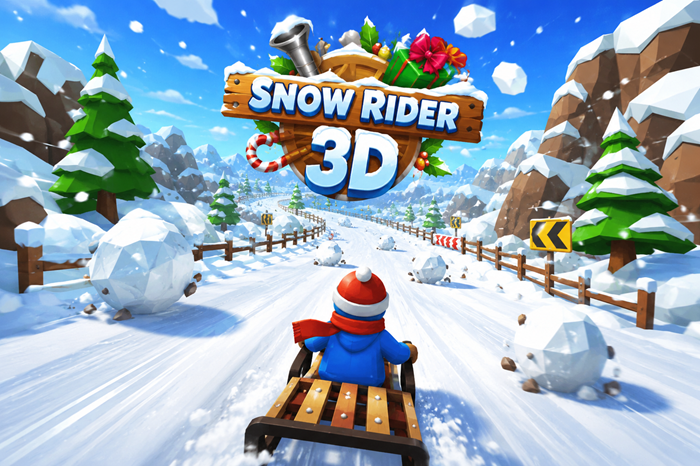
Snow Rider 3D is a fast-paced endless runner where you guide a sled down a snowy mountain while avoiding obstacles, collecting gifts, and trying to achieve the highest possible score. Although the controls are simple, mastering the game requires quick reflexes, smart decision-making, and plenty of practice.
Whether you're a beginner trying to survive for more than a minute or an experienced player aiming for a new high score, this guide covers essential strategies, advanced techniques, and common mistakes to help you improve.
1. Learn the Controls
The first step is becoming comfortable with the controls.
Most versions use:
- Left Arrow or A – Move left
- Right Arrow or D – Move right
- Up Arrow or Space – Jump
The controls are responsive, so avoid holding movement keys longer than necessary. Small, controlled movements are usually better than dramatic swerves.
2. Focus Ahead Instead of Directly in Front
One of the biggest mistakes beginners make is staring at the sled.
Instead:
- Look about one-third of the screen ahead.
- Scan for upcoming obstacles.
- Plan your movement before reaching them.
Professional endless-runner players rely on anticipation rather than reaction.
3. Stay Near the Middle
The safest place is usually near the center.
Advantages include:
- Equal room to dodge left or right.
- Better visibility.
- More escape options.
Only move to the edges when necessary.
4. Make Small Adjustments
Avoid zigzagging wildly.
Instead:
- Move only enough to avoid obstacles.
- Return toward the center afterward.
- Keep your movements smooth.
Large movements often lead directly into another obstacle.
5. Don't Chase Every Present
Presents unlock sleds, making them valuable.
However:
Never risk crashing for a single gift.
Ask yourself:
- Is it easy to reach?
- Is another obstacle nearby?
- Will I lose control?
Missing one gift is much better than ending a great run.
6. Understand Obstacle Types
Snow Rider 3D includes many hazards.
Trees
These appear frequently.
Tips:
- Pass beside them.
- Avoid squeezing through tiny gaps.
Snowmen
These are wider than trees.
Leave extra space when passing.
Rocks
Rocks can appear suddenly.
Watch carefully because they're often partially hidden behind hills.
Wooden Fences
Sometimes there is only one safe opening.
Slow your movements and aim carefully.
Rolling Snowballs
These are unpredictable.
Watch their direction before committing to a path.
7. Master Jump Timing
Jumping is powerful but should be used wisely.
Good jumps:
- Over fences
- Over small obstacles
- During emergencies
Bad jumps:
- Random jumping
- Jumping without seeing the landing area
Remember:
You cannot steer as effectively while airborne.
8. Avoid Panic
As speed increases, panic becomes your biggest enemy.
When surprised:
- Stay calm.
- Make one clean movement.
- Avoid overcorrecting.
Many crashes happen because players dodge one obstacle and immediately hit another.
9. Learn the Obstacle Patterns
Although the game is randomized, many obstacle combinations repeat.
You'll begin recognizing:
- Tree pairs
- Fence openings
- Rock formations
- Snowman clusters
Experience allows faster decisions.
10. Prioritize Survival
High scores come from staying alive.
Many players lose because they:
- Chase gifts
- Attempt risky shortcuts
- Move too aggressively
A safe run almost always beats a risky one.
11. Practice Peripheral Vision
Don't focus on only one object.
Instead:
Watch:
- Current obstacle
- Next obstacle
- Gift locations
- Open paths
This broader awareness improves reaction time.
12. Stay Relaxed
Tension causes mistakes.
Relax your:
- Hands
- Shoulders
- Grip
Loose muscles respond faster than tense ones.
13. Build Rhythm
Snow Rider 3D rewards rhythm.
After a while you'll notice patterns:
Move.
Center.
Move.
Center.
Jump.
Repeat.
A steady rhythm reduces unnecessary movement.
14. Be Patient Early
Early sections are easier.
Don't play aggressively just because the speed is slow.
Good habits developed early continue into the faster sections.
15. React Early
The sooner you react, the smaller your movement needs to be.
Late reactions require:
- Bigger turns
- More corrections
- Greater crash risk
Early decisions make the game feel slower.
16. Recover Quickly
Everyone makes mistakes.
If you drift too far left:
Don't panic.
Simply:
- Move back smoothly.
- Prepare for the next obstacle.
Recovery is an important skill.
17. Memorize Safe Gaps
Some obstacle arrangements have obvious safe lanes.
Recognizing these immediately saves precious reaction time.
18. Improve Your Reaction Speed
Reaction speed improves with practice.
Exercises include:
- Playing regularly
- Avoiding distractions
- Staying focused
- Limiting long gaming sessions when tired
19. Play Full Screen
A larger screen helps you:
- Spot obstacles sooner
- Judge distances better
- Improve accuracy
If possible, avoid playing in a tiny browser window.
20. Reduce Input Delay
Better performance means better gameplay.
Close unnecessary programs.
Use a stable browser.
Avoid lag whenever possible.
21. Use Short Sessions
Instead of playing for an hour continuously:
Try:
- 10–20 minute sessions
- Small breaks
- Returning refreshed
Concentration stays higher.
22. Analyze Your Crashes
After every crash ask:
- What hit me?
- Why did I move there?
- Could I have reacted sooner?
Learning from mistakes speeds improvement.
23. Stay Mentally Flexible
Every run is different.
Don't expect the same pattern every time.
Adapt continuously.
24. Ignore Score Pressure
Many players crash because they start thinking:
"I'm about to beat my record!"
Instead:
Focus only on the next obstacle.
High scores happen naturally.
25. Practice Smooth Steering
Imagine drawing gentle curves rather than sharp angles.
Smooth steering keeps your sled under control.
26. Don't Overuse Jumping
Jumping feels safe.
Sometimes it isn't.
Poor jumps can land directly into:
- Trees
- Rocks
- Snowmen
Jump only with a clear landing area.
27. Improve Consistency
Consistency beats lucky runs.
Aim for:
- Several medium scores
- Fewer early crashes
Eventually those medium scores become record-breaking runs.
28. Learn Risk Management
Every decision has risk.
Examples:
High Risk:
- Sharp turns
- Last-second dodges
- Difficult gift collections
Low Risk:
- Staying centered
- Easy presents
- Wide openings
Choose the safer option whenever possible.
29. Maintain Focus
Avoid distractions.
Turn off notifications.
Play in a quiet environment if you're chasing a record.
Even one second of lost attention can end a run.
30. Enjoy the Game
Finally, remember that Snow Rider 3D is designed to be fun.
Improvement comes naturally through:
- Practice
- Patience
- Observation
Don't become frustrated after a crash.
Every run teaches something new.
Common Beginner Mistakes
Avoid these habits:
- Looking only at the sled
- Zigzagging constantly
- Chasing every gift
- Jumping randomly
- Reacting too late
- Hugging the edges
- Panicking at high speed
- Ignoring obstacle patterns
- Playing while distracted
- Giving up after a few crashes
Advanced Strategy
Experienced players often:
- Keep the sled near the middle of the track.
- Scan several obstacles ahead.
- Make only small steering corrections.
- Ignore difficult gifts.
- Jump only when necessary.
- Stay calm as speed increases.
- Recognize repeating obstacle formations.
- Recover smoothly from positioning errors.
- Focus on survival instead of score.
- Maintain a steady rhythm throughout the run.
Final Thoughts
Snow Rider 3D is easy to learn but challenging to master. Success comes from combining anticipation, precise steering, smart risk management, and consistent practice. Rather than relying on quick reactions alone, the best players read the course ahead, make deliberate movements, and stay composed even as the game accelerates. If you apply the techniques in this guide—staying centered, reacting early, jumping strategically, and learning from each run—you'll steadily improve your consistency and set higher scores over time.