


How Hospital Management Software Improves Patient Care and Efficiency
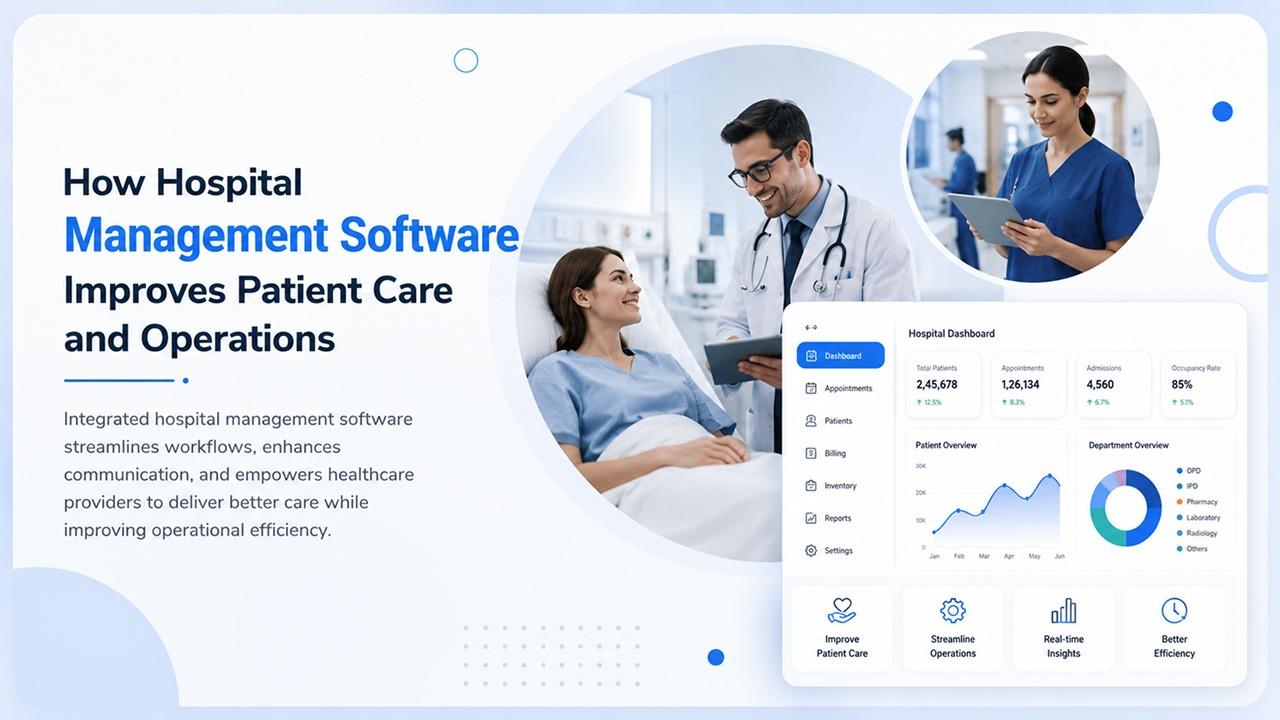
In today’s quickly shifting healthcare sector, hospitals and clinics are more and more using digital tools to sort of improve patient results while at the same time trying to make day-to-day routines feel smoother. Hospital management software has turned into a main tool for dealing with patient records, setting appointments, handling billing, tracking inventory and covering various admin duties all in one place. When these platforms automate regular steps and also make the way departments share information a little more strict, healthcare teams can deliver care that feels quicker, more exact, and more patient centered in general.
The need for dependable hospital management software keeps rising, since healthcare organizations are looking for new ways to increase efficiency and at the same time reduce operating expenses. Picking the right hospital management software solution helps hospitals tune their workflows, reduce the chances of medical mistakes, and lift overall patient satisfaction. On top of that, many hospital management software companies are releasing more advanced platforms that include cloud access, telemedicine connections, and real time dashboards, which backs facilities as they move forward with digital transformation while still keeping steady quality of care services.
The Importance of Hospital Management Software in Modern Healthcare
In today’s digital healthcare setting, a hospital management software system ends up doing a really vital job in backing patient care along with operational efficiency, even if it can feel like too much all at once. Hospitals are constantly juggling large amounts of patient information, appointments, billing, plus a bunch of admin chores, so manual routines start getting slow, error-prone, and honestly sort of messy.
With more advanced solutions finally in place, healthcare providers are able to smooth out everyday workflows, improve the back-and-forth between departments, and keep records more accurate, or at least more steady than they did before. Also, the rising need for hospital management software development has helped drive more inventive platforms, where multiple parts are basically tied together in one ecosystem. For example, lots of systems now connect electronic health records, pharmacy management and appointment scheduling inside a single shared interface.
That is why many healthcare organizations are moving toward what they call top hospital management software, aiming to cut operational costs, make use of available resources smarter, and build a better patient experience overall. Picking the best hospital management software solution really matters, because hospitals can base decisions on data while still meeting regulatory requirements and data security expectations. So, hospital management software companies keep building and fine-tuning new technologies for digital transition , and help healthcare facilities deliver services that run faster , and also feel more patient-focused.
How Hospital Management Software Improves Patient Care
A hospital management software system really does help patient care, in a noticeable way, by smoothing out clinical as well as administrative tasks. It kind of gathers patient records in one place, so doctors and health care staff can pull up the right medical histories, lab findings, and care directions right away. Because of that, you see fewer delays, less hold-ups, and fewer mistakes, plus people end up making decisions faster.
The latest top hospital management software goes beyond just records it also improves communication between departments, so coordination during patient care feels a lot more seamless. Things like online appointment booking, automated nudge reminders, and electronic prescriptions make the whole patient experience better, and yes, they also cut down how long people wait in line.
And as hospital management software development keeps moving forward, teams can bring in telemedicine, remote monitoring, and patient portals, so care feels more human and easier to access. A lot of hospital management software companies now offer scalable as well as secure options that can fit different health care facilities. Choosing the best hospital management software solution makes it easier for hospitals to raise efficiency, improve patient outcomes , and deliver high-quality care that stays firmly patient-focused.
How Hospital Management Software Improves Operational Efficiency
A modern hospital management software system really helps a lot with operational efficiency, mostly because it automates the usual routine administrative stuff and also a bunch of clinical tasks. Like you know patient registration and appointment scheduling, then billing processes and inventory management it cuts down the manual grind and keeps mistakes way lower. With solid hospital management software development, healthcare providers can bring different departments together into one shared platform so the communication gets smoother and decisions happen faster, instead of waiting around too long.
When you check out the best hospital management software solutions, they usually offer real time access to patient records, they simplify the everyday workflows and they improve how resources get allocated, so hospitals can deliver their services more effectively. On top of that, automated reporting and analytics make it easier for administrators to monitor performance, control spending and pinpoint the exact areas that need improvement later on.
Picking the right hospital management software solution can help hospitals increase productivity, reduce operational costs, and also make the patient experience feel noticeably better. Lots of hospital management software companies now provide cloud based and customizable platforms these options support scalability, so healthcare facilities can grow with changing demand, without compromising care quality or operational excellence.
Key Features That Enhance Patient Care and Efficiency
Modern hospital management software usually arrives with a bundle of advanced features, and they generally lift patient care as well as everyday operational speed, like it makes things glide quicker, you know. One of the most crucial parts in those systems is centralized patient record management it lets clinicians pull up the relevant medical details fast, with fewer interruptions or that annoying back and forth you get otherwise.
Appointment scheduling together with automated reminders tends to reduce waiting times a lot, and it can also make patients feel calmer. Still, in real life it doesn’t always follow the clean script people imagine, and sometimes things wobble a bit. The best hospital management system software often bundles billing along with insurance management, plus pharmacy and laboratory integration, and it usually adds real time reporting tools that just sort out those admin tasks, for real.
Patient portals and telemedicine features allow patients to look at their medical records, send a message to doctors, and receive care remotely, which turns out pretty useful during hectic stretches or high demand weeks. For a hospital management system project to actually work, it should also include analytics dashboards while pairing with inventory management, so hospitals can decide from the numbers and fine tune resources at the same time. When healthcare organizations adopt the best hospital management software, they often notice fewer errors, higher productivity, smoother coordination across departments, and more patient centered care delivered in a steady, consistent manner.
Benefits of Implementing Hospital Management Software
Getting hospital management software in place has a lot of benefits, and it really does improve patient care alongside the whole daily workflow. Most newer platforms handle the usual routines for you, like patient registration, appointment booking, billing, and keeping the records. Because of that, doctors, nurses, and other healthcare pros can spend more time on actual treatment instead of chasing documents. And when patient information stays in one place, hospitals often see fewer medical mistakes, smoother transfers between departments and quicker decisions, based on data that’s simpler to understand and read.
The best hospital management system software also reaches patients in a more direct way. Patients often receive quicker service, their medical records end up more accurate, and they can find healthcare info with less friction. On top of that, it helps with smarter resource use, reduces administrative burden, and supports revenue control because billing and insurance processing can be automated and kept under steady monitoring. When a hospital management system project is done properly, it tends to strengthen compliance, improve data protection reliability, and raise productivity across teams. Choosing a high quality hospital management software solution also helps facilities deliver patient focused care, even while they deal with the rising pressure and expectations in today’s healthcare space.
The Role of AI and Automation in Hospital Management
Artificial intelligence, together with automation is kinda reshaping hospital management software, and honestly it’s doing it in a way that is supposed to help patients, but also to make the day to day operations move a lot smoother, and pretty quickly. In newer hospital management systems, AI gets used to scan patient data, spot possible health risks, and kind of nudge clinicians toward better choices sooner more precise not only faster.
Meanwhile automation takes care of appointment scheduling, invoicing, patient registration, and even inventory management, so there’s less manual labor, plus fewer small mistakes showing up during the whole flow. The leading hospital management system software usually comes bundled with those smarter extra bits too, like predictive analytics, automatic reminders, and resource optimization, which helps the facility stay more steady overall.
If a hospital management system project is planned and rolled out properly, healthcare organizations can reduce friction between different departments. They can streamline their routines and make sure patient care stays on time or at least more predictably timely, even when the schedule gets chaotic. Also, solid hospital management software is built to handle information securely, while still lifting productivity and trimming operational costs. And because the AI tech keeps leveling up, it will likely take an even larger role in creating healthcare systems that feel more intentional, more efficient, and more patient centered in real practice
Future Trends in Hospital Management Software
Hospital management software isnt really, you know, staying put in the future it is getting pushed ahead by artificial intelligence, cloud computing, and data analytics. These days, a bunch of modern hospital management systems are startin to stitch in AI based features, sort of to anticipate diagnostics, guide workflows with less manual hassle, and lend a hand with more individualized patient support.
Cloud based platforms are popping up more often too, so providers can access patient details in a protected manner from basically anywhere, and at the same time collaboration between departments feels a little smoother, more or less. From my side, the best hospital management system software will keep leaning on interoperability, meaning it can connect without drama to telemedicine platforms, wearable devices, and electronic health records.
And then automation plus real time analytics should help hospitals fine tune resources, cut down costs, and improve day to day operations. It is not just about efficiency for efficiency sake, but also about having fewer slowdowns and better decision making when things get busy. Plus, as healthcare organizations pour capital into digital transformation, every hospital management system push tends to put cybersecurity, scalability, and patient centered solutions pretty high on the list. Choosing the best hospital management software lets hospitals improve care quality, simplify admin work, and stay ready for the shifting expectations in modern healthcare, even when requirements flip quickly, and yeah you know how that goes.
Conclusion
Hospital management software has basically turned into a must-have for healthcare organizations that want to care for patients better and keep their day to day stuff running smoother. When they automate the paperwork things, gather all patient details in one single place, and make communication between teams a bit more organized, providers can end up delivering services faster, and honestly with more accurate outcomes. So deciding on the top hospital management software, or picking the best hospital management software solution, is often the move that helps hospitals lower costs and raise productivity. And because the hospital management software companies keep pushing ahead adding AI, leaning into cloud technology , and all that related progress hospitals can likely expect even stronger results, both for patient outcomes and for overall healthcare management .